
Grid Capacity for Wheeled Energy: A Province-by-Province Analysis
11 August 2026 · Energy Brokers
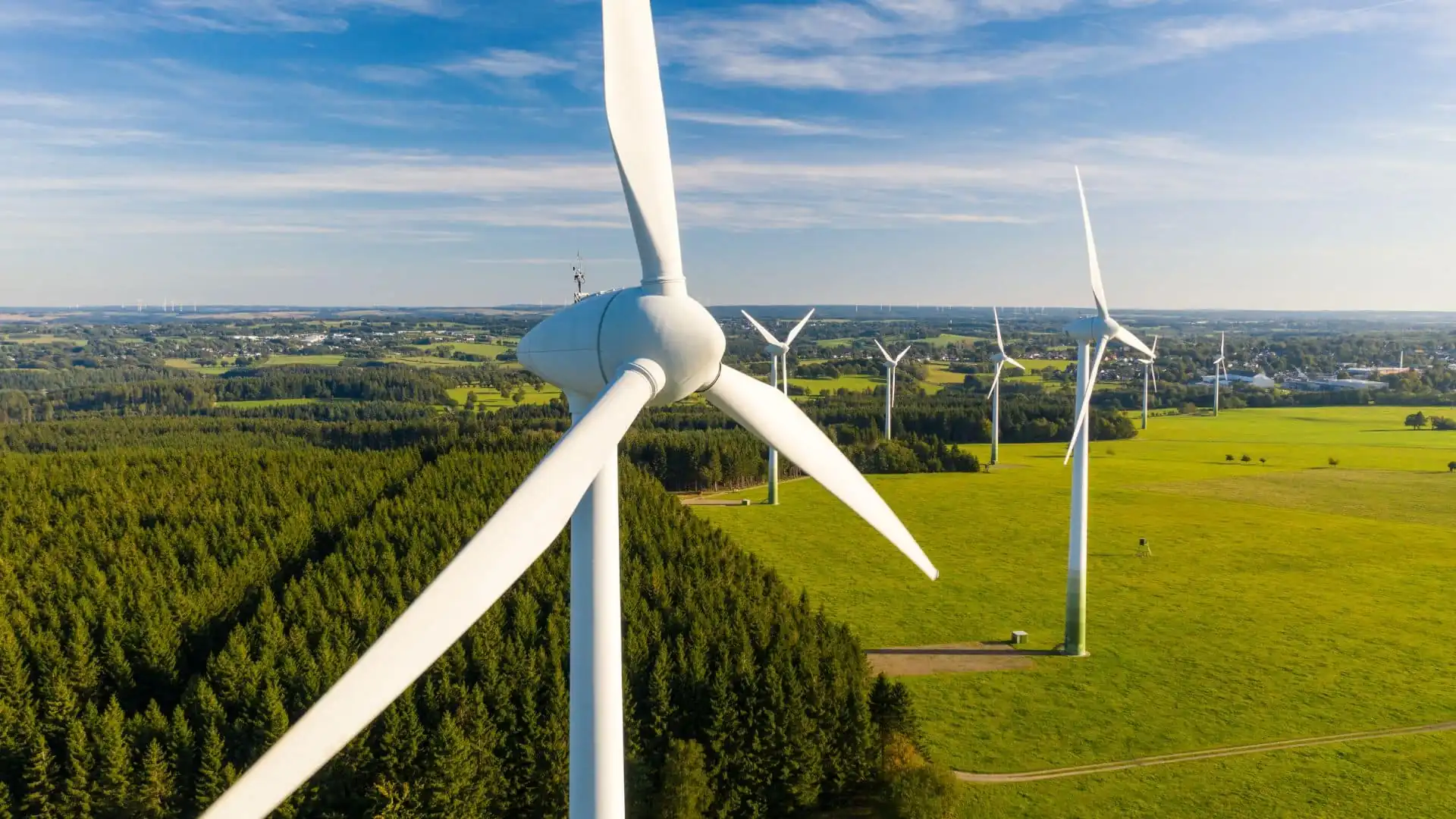
Grid capacity is the constraint that decides whether a wheeled energy project is possible. Not the strength of the wind resource, not the price of panels, not the appetite of the offtaker. If there is no transmission capacity where a project wants to connect, the project does not happen.
This is the least understood part of renewable energy procurement in South Africa, and it is the part most likely to derail a deal that looks sound on paper. Here is where capacity currently sits, and what the numbers mean commercially.
What Grid Capacity Actually Means
Eskom publishes an assessment of how much new generation can connect at each main transmission substation on the network — the Generation Connection Capacity Assessment, or GCCA. It is a technical document, but the concept is simple: each part of the network can carry a finite amount of additional generation before it requires physical reinforcement.
Capacity is allocated as projects secure connection, broadly on a first-come basis. Once a substation's available capacity is taken up — by REIPPPP bid window projects, by private bilateral wheeling deals, or by any other connecting generator — it is gone until new transmission infrastructure is built.
This produces a result many businesses find counterintuitive: the areas with the best wind and solar resource in South Africa are frequently the areas with the least available capacity, precisely because everyone else identified the same resource first.
Available Capacity by Province
The figures below are drawn from the GCCA 2025 assessment and represent indicative available transmission capacity for new generation connection.
| Region | Available capacity | Practical read |
|---|---|---|
| KwaZulu-Natal | 5,500 MW | Most headroom in the country |
| Gauteng | 4,680 MW | Substantial capacity, though a demand centre rather than a generation one |
| Limpopo | 3,360 MW | Strong solar resource with real capacity available |
| Mpumalanga | 3,320 MW | Existing transmission infrastructure from the coal fleet |
| North West | 1,660 MW | Moderate capacity |
| Free State | 1,420 MW | Moderate capacity |
| Northern Cape | 0 MW (firm) | Fully constrained — strongest solar resource in the country |
| Western Cape | 0 MW (firm) | Fully constrained for firm capacity; see curtailment below |
| Eastern Cape | 0 MW (firm) | Fully constrained for firm capacity; see curtailment below |
| Hydra Central* | 0 MW | Transmission supply area, fully constrained |
That is roughly 19,900 MW of firm capacity nationally — and the distribution matters more than the total.
The Uncomfortable Pattern
Look at where the capacity is, and where it is not.
The Northern Cape has the best solar irradiation in South Africa and zero firm capacity. The Western and Eastern Cape have the country's strongest wind resource and zero firm capacity. Meanwhile KwaZulu-Natal, Gauteng, Limpopo and Mpumalanga — none of them first-choice renewable resource areas — hold the overwhelming majority of what remains.
This is the central tension in South African renewable energy procurement. The grid was built to move power from Mpumalanga's coal fleet to demand centres. It was not built to collect generation from the Cape and the Northern Cape. Renewable resource and transmission capacity are geographically mismatched, and closing that gap requires physical infrastructure that takes years.
For an offtaker, the practical consequence is that project location is a commercial variable rather than a technical footnote. A project in a province with available capacity can connect. A project in a constrained province is waiting on reinforcement, alternative routing, or a curtailment arrangement — and those are materially different propositions with different timelines.
Curtailment Changes the Cape Picture
The zeroes against Western Cape and Eastern Cape are not the full story, and this is where a surface reading of the map misleads.
Eskom introduced a curtailment arrangement under which generators accept that their output may be constrained during periods when the network cannot absorb it, in exchange for permission to connect where firm capacity has run out. Under the GCCA 2025 Addendum, this released approximately 2,680 MW in the Western Cape and 790 MW in the Eastern Cape — around 3,470 MW in total, in two provinces previously assessed as having no room for new wind generation.
So the Cape provinces are not closed. They are open on different terms.
The trade-off is real and should be understood before it is priced. A curtailable connection generates less than its theoretical maximum, the degree of curtailment is not perfectly predictable, and how that risk is allocated between IPP and offtaker is a negotiation point in the Power Purchase Agreement rather than a technical detail to be resolved later.
When comparing project proposals, establishing whether the underlying connection is firm or curtailable is one of the more consequential questions you can ask. Two projects quoting similar tariffs are not equivalent if one is firm and the other is curtailed.
Why the Constraint Persists
Transmission infrastructure has long lead times and requires substantial capital. The national grid needs over R200 billion to develop roughly 14,000 km of new transmission lines, plus additional transformer capacity in constrained areas.
The timing is the problem. Eskom's transmission upgrade funding only becomes substantial after 2030, while capacity constraints and rising electricity prices are expected to bite from 2027 onwards. Capacity is needed now; reinforcement arrives later. That gap is the structural reason grid access — not resource, not price, not technology — is the binding constraint on wheeled energy today.
Demand is not waiting either. REIPPPP Bid Windows 7 and 8 are each expected to deliver around 5 GW of new generation capacity, and more than 20 GW of projects are estimated in the private offtaker pipeline. Against roughly 19,900 MW of firm capacity nationally, the arithmetic is straightforward: the pipeline is larger than the grid.
There is one further figure worth holding onto. Eskom has noted that since 2019, only around half of awarded renewable energy projects — projects that already held both grid allocation and an offtake agreement — have actually been built. Capacity is scarce, and a meaningful share of what has been allocated sits with projects that may never deliver energy.
What This Means for Your Procurement Decision
Three practical implications.
Location determines feasibility. Before evaluating tariff, establish where a project connects and whether that connection is secured. A speculative connection in a constrained province is not comparable to a firm connection in a province with headroom, regardless of how the pricing looks on a spreadsheet.
Waiting has a cost that does not appear on any quote. Capacity is allocated continuously. Deferring a decision by eighteen months is not choosing between acting now and acting later on identical terms — it is competing for a smaller remaining pool, at a point when both the REIPPPP and private pipelines have absorbed more of it.
"Grid capacity secured" needs unpacking. The phrase means different things depending on whether a budget quotation has been issued, accepted, or paid for. Establishing exactly where a project sits in that process is a core part of due diligence, and given that only half of awarded projects have historically been built, it is not a formality. This is what vetting means in practice, and it is why Energy Brokers maintains a pipeline of over 1,500 MW of vetted wind, solar and BESS projects rather than a list of proposals.
Check the Position for Your Project
Our market review includes the full grid capacity overview by region, drawn from the GCCA. For the mechanics of connection and contracting, see how energy wheeling works.
To have your own position assessed — your load profile, your tariff, and which vetted projects can realistically serve you given current capacity — our feasibility analysis is provided at no cost and no obligation. Energy Brokers is not tied to any IPP, and our fees are absorbed by the producer rather than charged to you.