
Wheeled Energy vs Embedded Generation: What's the Difference?
11 August 2026 · Energy Brokers
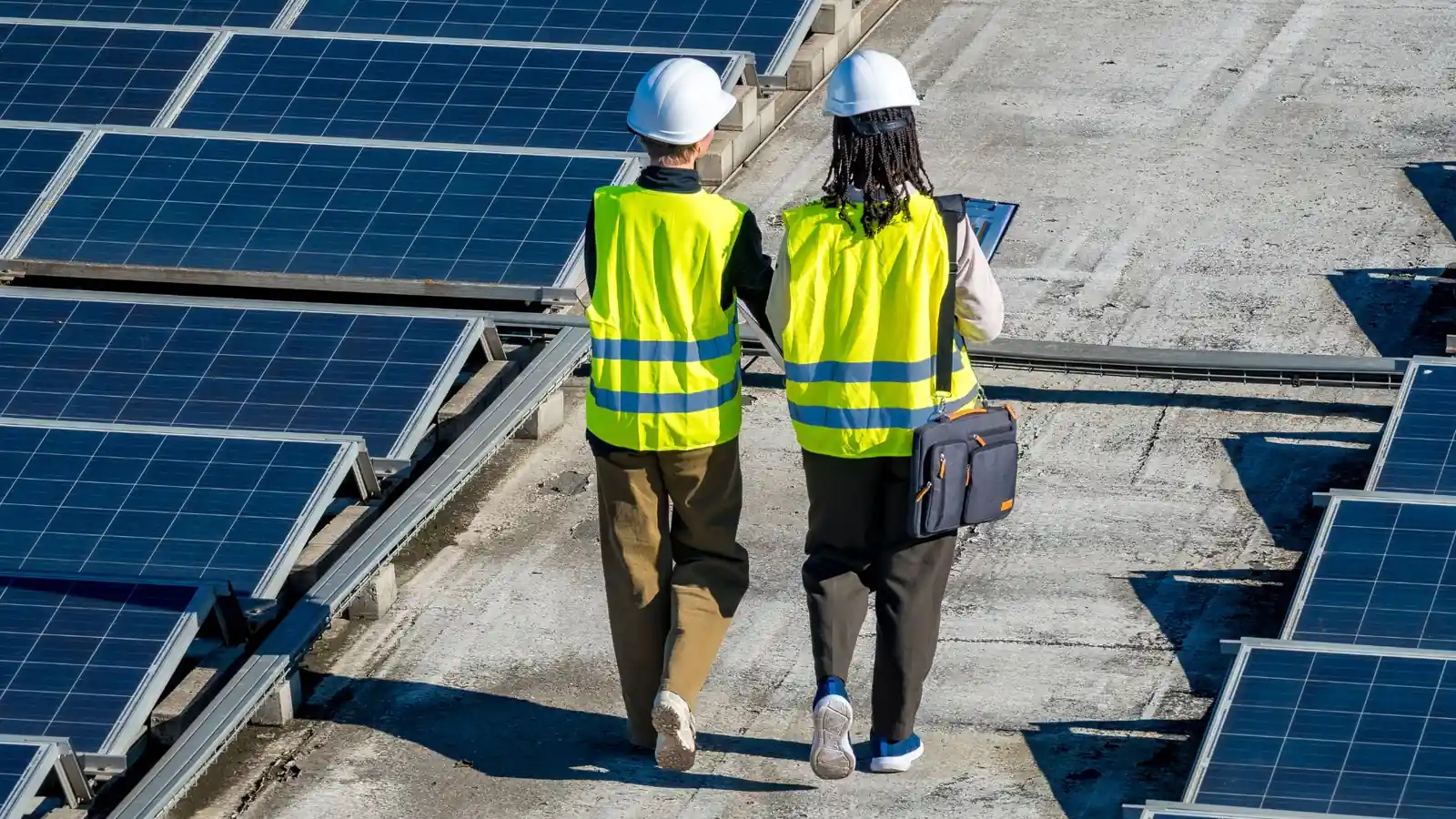
Most large energy users in South Africa are presented with these two options as though they were competing answers to the same question. They are not. They solve different problems, carry different risks, and — more often than people expect — work best together.
Here is a practical comparison, written for the person who has to defend the decision internally.
The Core Distinction: Where the Energy Is Generated
Embedded generation means generation on your own site, behind your own meter. Solar PV on the roof or on adjacent land, usually with an inverter and increasingly with battery storage. You either own the system or host it under a lease or on-site PPA. The electricity never enters the national grid — it goes straight into your building.
Wheeled energy means generation somewhere else entirely. An Independent Power Producer operates a wind, solar or battery storage facility in a location with good resource and available grid capacity, and that energy is transmitted to you across Eskom's network. You keep your existing connection. A Power Purchase Agreement governs the commercial terms, and Eskom reconciles the energy against your consumption. Our explainer on how energy wheeling works walks through the mechanics.
Everything else follows from that single difference.
Capital and Balance Sheet
Embedded generation involves capital, whether you fund it directly or accept a lease structure that sits on your balance sheet under current accounting treatment. You are also taking on an asset — with the maintenance obligation, insurance, performance risk and eventual replacement cycle that comes with owning generating equipment. For businesses that operate from leased premises, this raises an awkward question about who owns what at the end of the lease.
Wheeled energy involves no capital outlay and no asset on your books. You are buying electricity under contract, not buying equipment. For a CFO comparing options, this is frequently the deciding factor — particularly where capital is already committed to core operations.
Scale and Site Constraints
This is where embedded generation runs into hard physical limits.
Your roof is whatever size it is. Available land is whatever you have. For a business with high consumption and a modest footprint — a cold storage facility, a data centre, most manufacturing plants — on-site solar can often only cover a fraction of total load, no matter how well designed.
Wheeled energy has no such constraint. The generation facility is sized to your requirement, not to your available roof space, and it can be located where the wind or solar resource is genuinely strong rather than where your factory happens to be. Energy Brokers maintains access to over 1,500 MW of vetted wind, solar and BESS projects across South Africa, which means the match is made to your load profile rather than to your postcode.
Technology Access — The Wind Question
There is one difference here that is frequently overlooked and often decisive.
Wind is effectively unavailable as an embedded generation option. Turbines are not something you install behind the meter at a commercial site. That matters because wind and solar have very different generation profiles: solar produces in the middle of the day, wind produces across a broader range including evenings and overnight.
If your operation runs three shifts, or your peak demand sits outside daylight hours, on-site solar structurally cannot cover it. Wheeled energy can, because it gives you access to wind generation and to hybrid structures combining technologies.
Energy Security
Embedded generation with battery storage protects your site during a grid outage. That is its clearest advantage and it should not be understated.
Wheeled energy provides no outage protection at all. It is delivered over your existing grid connection, so if the grid is down, so are you. We are direct about this with clients, and it is covered in our FAQ.
Worth noting how much this has changed in weight, though. South Africa has not had load-shedding since May 2025, and Eskom's generation availability has improved substantially. Energy security remains a genuine requirement for operations where an outage carries real cost — but for many businesses it is no longer the dominant concern it was two or three years ago.
They Are Not Mutually Exclusive
The most common mistake we see is treating this as a binary choice, particularly among businesses that already have on-site solar and assume that closes the question.
It does not, for two reasons.
Eskom's wheeling framework reconciles energy on a Monthly Time of Use basis. This means a wheeled solar solution can add meaningful penetration even where your embedded system appears, on paper, to be sized to your full load. The reconciliation period is not instantaneous, and the arithmetic works out differently from what a simple annual-generation comparison suggests.
Wind fills the gap your solar cannot. Where your on-site PV stops producing — early morning, evening, overcast periods — wheeled wind can continue. For a business chasing a high renewable penetration percentage rather than a token installation, combining the two is usually the only route there.
A realistic structure for a large energy user often looks like: embedded solar and storage covering critical load and providing outage resilience, with wheeled energy covering the bulk of consumption at a contracted price. Different instruments, different jobs.
A Straightforward Comparison
| Embedded generation | Wheeled energy | |
|---|---|---|
| Generation location | On your site | Remote IPP facility |
| Capital required | Yes | No |
| Asset on balance sheet | Typically yes | No |
| Scale ceiling | Limited by site | Sized to requirement |
| Wind available | No | Yes |
| Outage protection | Yes, with storage | No |
| Contract term | Varies | Typically 5–20 years |
| Suits leased premises | Poorly | Well |
Which One Is Right for Your Business?
It depends on your load shape, your consumption volume, your tenure at the site, your capital position and whether outage resilience carries real cost for you. Those are not questions that can be answered from a website.
Energy Brokers is not tied to any IPP and does not sell equipment, so we have no commercial interest in steering you toward either answer. Our fees are absorbed by the producer, not charged to you. If embedded generation suits your situation better than wheeling, we will tell you that.
Our feasibility analysis assesses your tariff structure, load profile and energy goals, and gives you an evidence-based answer at no cost and no obligation.